

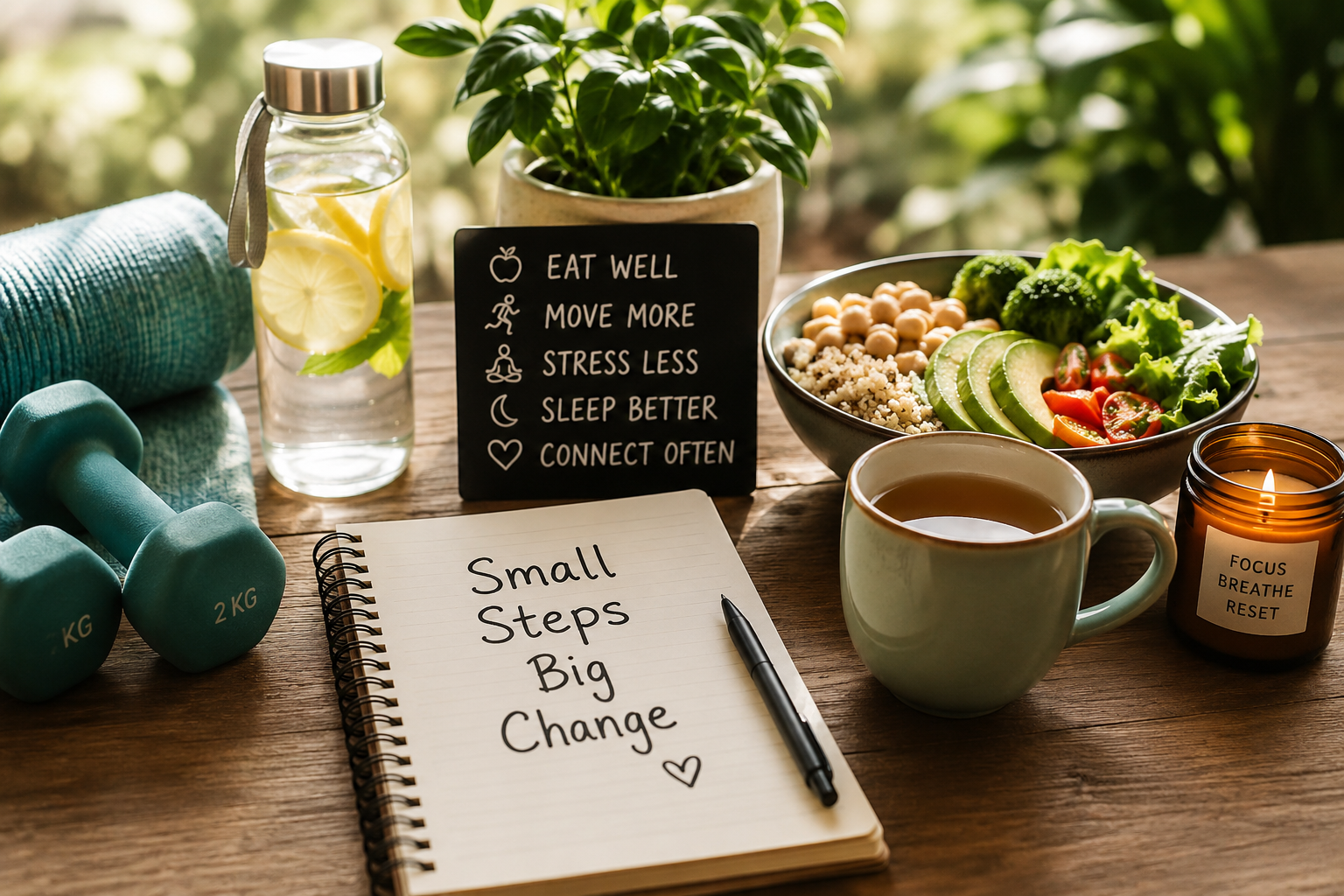
Busy parents juggling work and wellness, caregivers managing everyone else’s needs, and professionals running on deadlines often share the same frustration: daily self-improvement sounds good, but real life keeps interrupting it. The core tension is wanting feeling your absolute best while relying on routines that are hard to sustain when energy, mood, and time are already stretched thin. The most helpful well-being strategies don’t demand perfection, they meet people where they are and support steady momentum. With a practical, holistic health for general readers approach, motivation for personal wellness can become something that holds up on ordinary days.
Quick Summary of Daily Well-Being Steps
● Add regular exercise to boost energy, strengthen your body, and support overall well-being.
● Build simple self-care routines that help you feel refreshed, grounded, and more like yourself.
● Choose nourishing foods that support steady vitality and help you feel your best each day.
● Support mental and emotional health with daily practices that reduce stress and lift your mood.
Explore 4 Stress-Soothers: Breathwork, Adaptogens, and Hemp Options
Once you’ve got a quick daily game plan, it can help to know a few extra, optional tools for those higher-stress moments. Alternative modalities some people explore include simple breathwork (slow, steady breathing), ashwagandha (an adaptogen some use for stress support), other adaptogens, and CBD (a hemp-derived option some find calming). These aren’t one-size-fits-all, and it’s wise to check for interactions, legality, and personal sensitivity, especially if you’re pregnant, nursing, or on medications. If cannabis-derived options are relevant where you live, some people look into top-rated THCa cartridges as one format.
Understanding the Three Pillars of Resilience
Well-being is built on three pillars that work together: physical basics, mental awareness, and real social connection. When one pillar wobbles, your mood and energy often wobble too, even if you are trying hard. Think of this as a quick framework to spot what is missing before you add new habits.
It matters because resilience is not just willpower. Social ties are protective in a big way, and lack of social connection can be a serious health risk. Mental health strengthens as resilience rises, and positive indicators of mental health tend to track with it.
Picture a rough week: you sleep poorly, skip lunch, and stop replying to friends. Your anxiety spikes, so you try a new routine, but the real fix starts with one missing pillar at a time. With the pillars clear, daily habits become easier to choose and personalize.
Micro-Habits to Feel Better, One Day at a Time
The fastest way to feel better is to make the next right step easy. These micro-habits build momentum through repetition, and research on 66 days for a new behavior suggests consistency matters more than intensity.
Ten-Minute Outside Walk
● What it is: Walk outdoors at an easy pace, phone in pocket.
● How often: Daily
● Why it helps: Light movement and daylight can lift energy and calm stress.
Protein-Plus Breakfast Add-On
● What it is: Add eggs, yogurt, beans, or tofu to whatever breakfast you already eat.
● How often: Daily
● Why it helps: Steadier blood sugar can reduce midmorning irritability and cravings.
Two-Minute Body Reset
● What it is: Do gentle shoulder rolls, neck stretches, and five slow breaths.
● How often: Twice daily
● Why it helps: It releases tension before it becomes a headache or spiral.
One Real Reach-Out
● What it is: Text, call, or voice-note one person with a specific check-in.
● How often: 3 times weekly
● Why it helps: Reliable connection lowers stress and strengthens your support net.
Fifteen-Minute Creative Play
● What it is: Sketch, cook, garden, dance, or tinker with a simple project.
● How often: Weekly
● Why it helps: Simplicity and immediacy make it easier to keep going.
Use One Uplifting Podcast to Reinforce Your Mindset Daily
Once you’ve started building small, feel-better habits, a steady dose of encouragement can help you keep that momentum going. Listening to an inspiring podcast can boost daily well-being by giving you motivation, practical mindset shifts, and real-life stories that make challenges feel more manageable. The right voices can help you stay focused on what matters, keep a more hopeful outlook when the day gets stressful, and feel more emotionally balanced as you move through work, family, and everything in between.
One easy way to make this support feel personal is to tune into an alumni podcast that shares inspiring stories and practical insights from people who transformed their lives through learning. Hearing how others navigated uncertainty, stayed committed, and created new opportunities can offer both motivation and grounded advice, especially if you’re considering your own next steps toward success. If you want a real-world example series to explore, you can give it a glance. And when life gets busy and your routine gets tested, the next section will help you keep healthy changes going without starting over.
Well-Being Q&A: Staying Consistent and Bouncing Back
Q: What if I can’t stay consistent with daily self-care?
A: Consistency starts with making the habit small enough to succeed on your worst day. Pick one action that takes under two minutes, then attach it to something you already do, like brushing your teeth or making coffee. Many people find it helps to select habits tied to goals so effort feels meaningful, not random.
Q: How do I rebuild after I fall off my routine for a week (or more)?
A: Treat it as a pause, not proof you failed. Restart with one “anchor habit” for three days, then add a second only after the first feels automatic. If you can, write down what threw you off so you can plan a gentler version for busy weeks.
Q: Why do simple steps matter if my stress feels huge?
A: Big stress often improves with steady, repeatable supports, not one perfect fix. Skills from approaches like CBT can help people practice more flexible thinking, and research has found the effect of CBT can be small but significant for resilience right after intervention. Start with one step you can repeat daily, like a five-breath reset or a short walk.
Q: When should I push through discomfort versus rest?
A: If you feel mild resistance, try starting for two minutes and reassess. If you feel pain, dizziness, or emotional overwhelm, choose rest or a lighter option like stretching, hydration, or texting a supportive friend. Your well-being plan should be challenging sometimes, not punishing.
Q: Can I improve my well-being without changing everything at once?
A: Yes, and it often works better that way. Choose one habit for your body, one for your mind, or one for your relationships, and keep them intentionally small. Tiny actions done often build trust in yourself.
Turn Daily Habits Into Lasting Well-Being and Confidence
It’s easy to feel stuck between wanting to feel better and the reality of busy days, setbacks, and uneven motivation. The steadier path is a simple mindset: reflect on what actually helps, and build consistency through small, repeatable choices that fit real life. Over time, that’s how empowerment through small changes becomes consistent health improvements and lasting well-being benefits. Small, consistent steps create the strongest kind of change. Choose your next two actions and do them today, then repeat them at the next natural moment in your routine. That’s how integrating wellness into lifestyle supports resilience, stability, and a stronger sense of connection to your own health.




Share:
Benefits Of Incorporating Supplements into Your Lifestyle
Peptides: A Growing Frontier in Modern Nutrition and Wellness