

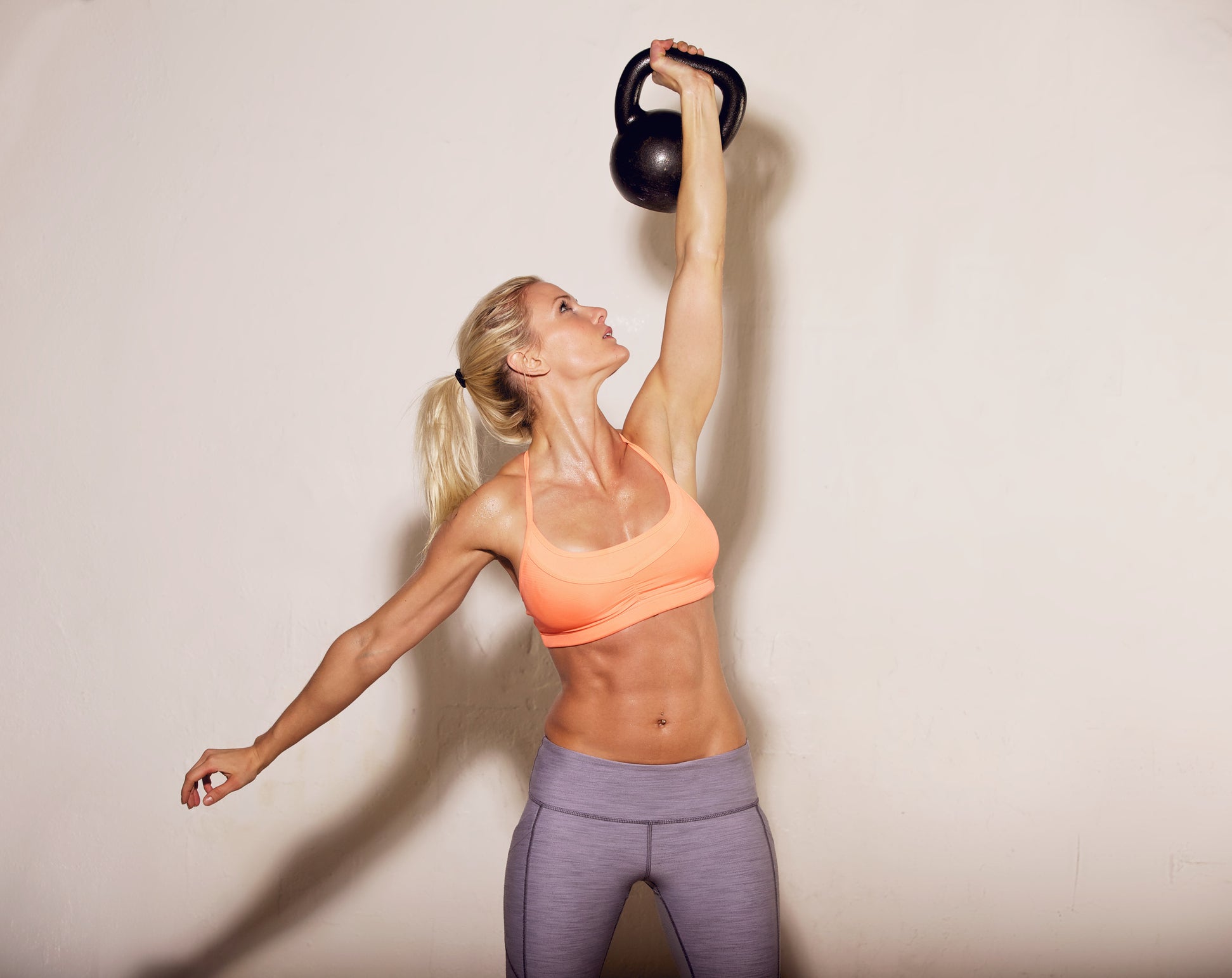
The gym is an easy place for confusion to set in. There can be so many options that choosing a workout plan often becomes overwhelming as questions keep popping into mind. Cardio or weights? Free weights or machines? Which machines should I go for? What are the rules of the squat rack? How do I know whether to use dumbbells, barbells, or kettlebells?
It’s a lot to consider, so knowing the uses behind some of the equipment is a major benefit. After all, knowledge is power, which definitely translates to the gym, and kettlebells are a great place to start. Often misunderstood and swapped out for dumbbells, kettlebells actually have a purpose entirely their own. While the dumbbell rack is ideal for performing basic strength movements (curls, presses, and so on), kettlebells are better suited for explosive and dynamic moves, like swings, cleans, and snatches.
CrossFitters are big proponents of kettlebell training for this reason, but people competing in sports that require explosiveness, like basketball, benefit from kettlebells, as well as exercisers looking to achieve big gains. Below are a few more reasons why training with kettlebells can be a good idea.
Give kettlebells a go if you want to…
… mix up your workout. The same old routine is going to get boring for both you and your muscles. Muscle memory is a real thing, so if you’re looking to get out of a workout rut (after all, burpees can only be affective for so long—yeah, we said it), throw in some kettlebell movements during a HIIT workout, even if it’s just for your finisher. Feel the burn the last 60 seconds of your gym sesh with a minute of full-effort kettlebell swings. These can spike your heart rate, which pushes your cardiovascular system as well as your strength. All of your posterior muscles—glutes, hamstrings, and back muscles—are activated in this one exercise, which makes it more of a full-body burn than a simple curl.
… enhance grip strength. The horn, or handle, of kettlebells are thicker than dumbbells’, so it activates more muscles in your hand and forearm in order to hang on, improving the strength of your grip. One beneficial exercise is a bent over row, which can strengthen the grip and prepare you for more difficult movements like pull ups.
… give yourself an extra challenge. Dumbbells provide more stability, whereas kettlebells place the center of gravity about six to eight inches away from the hand. Many kettlebell exercises are tougher because of this, since you have to work to both lift and stabilize the weight. It’s definitely more of a challenge to lift with kettlebells, but they help prepare you to pick up everyday objects that are unbalanced, like taking out the trash or moving furniture. Instead of targeting just one muscle or area, like dumbbells do, the instability of kettlebells engage several muscles at once, including the core.



Share:
10 Foods & Drinks That Boost Metabolism
Happy St. Patricks' Day - Green Smoothie Recipe